

Agricultural tyre inflation pressure: how to choose the right value
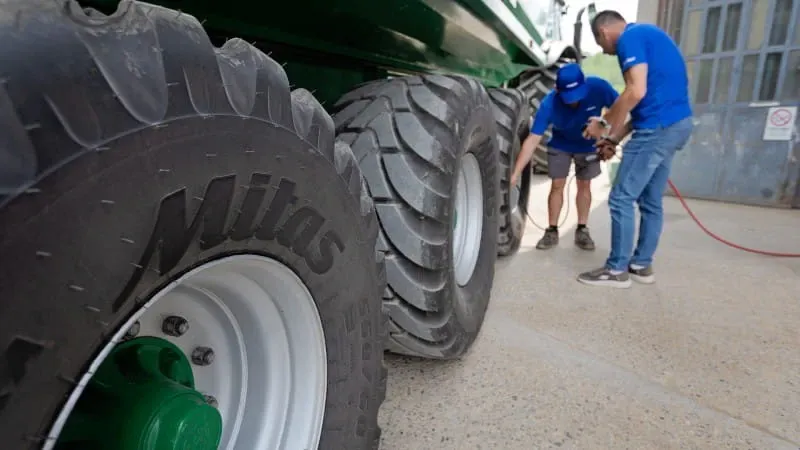
Did you know that the right tyre inflation pressure isn’t just a technical detail; it’s a true performance booster for your farm? Setting the correct pressure helps protect soil fertility, improve efficiency, and increase profitability. Today’s tractors and machines let operators adjust pressure directly from the cab, making optimization fast and easy. So why not turn this technology into a real competitive edge? In this article, we show how adapting tyre pressure to different conditions can enhance performance, maximizing traction, reducing soil compaction, and boosting productivity across your fleet.
How pressure should vary from field to road
During field operations, lower tyre pressures should be used, while for road transport it is advisable to increase the pressure, always staying within the minimum and maximum values recommended by the tyre manufacturer. Let’s take a closer look at the benefits of choosing the correct pressure.
Greater soil fertility
All the weight of an agricultural machine rests on its tyres, and this load is transferred to the ground at the contact area between tyre and soil. In this area, high pressures can develop, compacting the soil and reducing its porosity. Less porous soil is more prone to surface waterlogging during and after rainfall, which can lead to root asphyxiation and promote rot.
By reducing tyre inflation pressure during field work, the tyre’s footprint increases. As a result, the pressure exerted on the ground decreases, compaction is minimized, and both soil fertility and crop health are preserved.
Greater traction
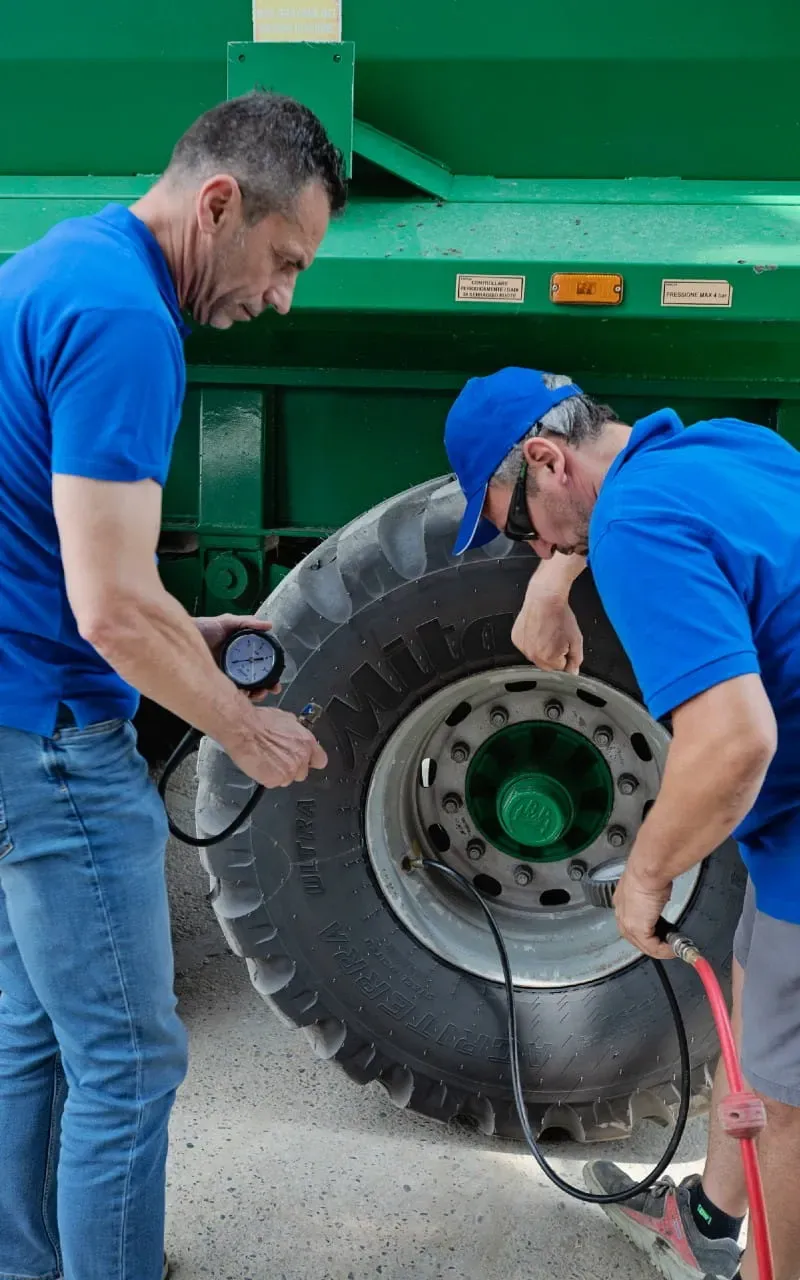
Lowering tyre pressure in the field also improves traction. This is once again due to the larger contact area with the ground, which reduces wheel slip. Better traction translates into higher productivity, as machines can operate at higher speeds or handle larger implements more efficiently.
Higher profitability
The economic benefits of choosing the correct tyre inflation pressure are significant. Improved soil fertility leads to higher yields and, in turn, increased profits. Enhanced traction further boosts machine productivity, contributing to greater overall efficiency and earnings.
During road transport, increasing tyre pressure reduces the footprint and consequently lowers rolling resistance. This allows tractors to travel faster while using less fuel, delivering a clear double advantage.
Calculating the correct pressure value
To help determine the correct pressure for each tyre, Mitas has developed a tool that calculates the recommended value based on inputs such as tyre width, aspect ratio, rim diameter, product type, speed, and load capacity. This greatly simplifies the process of identifying the correct pressure, especially when managing multiple tyre configurations. Click here to use the Mitas tyres Pressure Calculator!
Conclusion
To get the most out of their tyres, every agricultural entrepreneur should know how to adjust tyre pressure according to different operating conditions. Doing so improves machine performance, protects soil health and fertility, and ultimately increases the profitability of farming operations.