

Best practices for storing agricultural tyres during extended non-operational periods
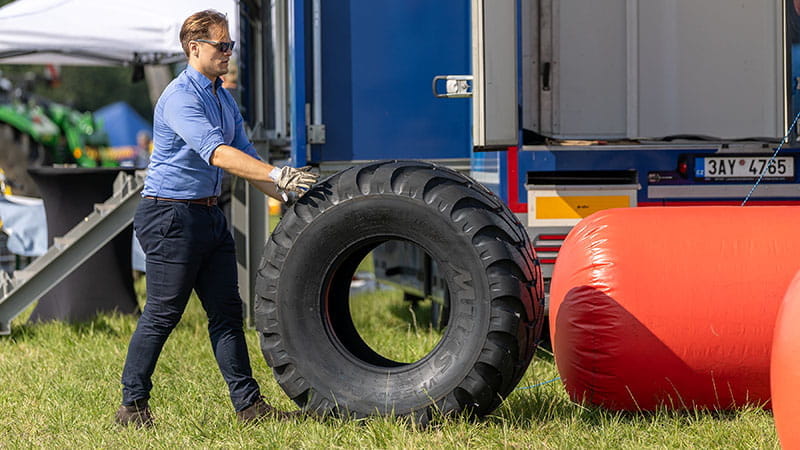
A few simple but essential precautions
In theory, the best solution would be to lift the machine so that the tyres do not touch the ground. In practice, this is extremely difficult to implement when dealing with agricultural machines weighing several tens of tons. For this reason, the most effective approach is to follow a few simple guidelines that help ensure optimal tyre preservation during extended non-operational periods:
- Clean the tyres thoroughly, check for any imperfections, and carefully remove any foreign objects trapped in the tread
- Visually inspect the rims, paying particular attention to the bead area. This is a very sensitive zone, and even small stones lodged in this area can cause tyre pressure loss
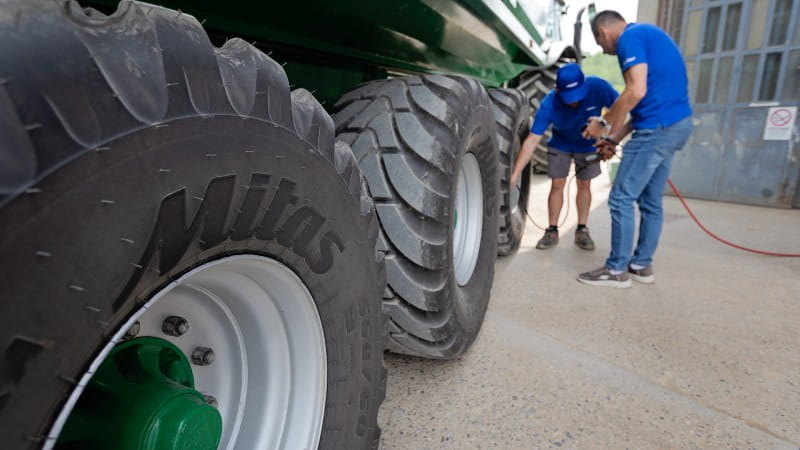
- Increase tyre inflation pressure to the maximum permitted value
(by approximately +0.5 bar above the standard operating pressure in the case of large machines).
To quickly identify the correct pressure value, you can use the Mitas Tyres Pressure Calculator
As an example, consider the HC 3000 tyre designed for combine harvesters, in size VF 710/70 R 42. By filling in all the required fields in the calculator - measurement system, tyre size, speed, and load capacity -you can easily determine the correct inflation pressure.
What not to do during extended non-operational periods
Extended parking with underinflated or completely deflated tyres should be strictly avoided.
During certain field operations, you may lower tyre inflation pressure, in order to reduce soil compaction and improve tractor traction. In these cases, it is essential to restore tyre pressure to standard values before a long non-operational period.
For further details, refer to the articles dedicated to correct tyre inflation pressure and to the effects of soil compaction.
Failing to restore proper pressure can lead to the formation of flat spots, which may later cause vibrations, noise, and wheel oscillations, putting both machine safety and performance at risk.
Tips for storing removed tyres
If it is possible to remove the tyres from the agricultural machine before an extended non-operational period, store them in a dry place, away from direct sunlight and weather exposure. The ideal storage temperature is approximately 15 °C.
If possible, rotate the tyres by 90 degrees once a month and keep them away from chemicals or solvents.
Minimum effort, maximum result
Tyres are a fundamental component of any agricultural machine and therefore require the same level of attention. By following these simple precautions, you can store your tyres in the best possible way, maintaining high performance, safety, and product quality over time.