

Understanding agricultural tyre markings and dimensions
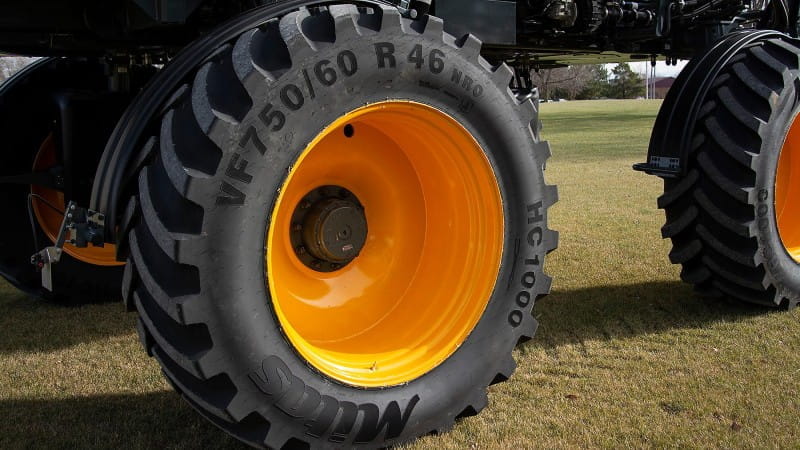
Do you really know how to recognize all the markings on tyres? This information is essential to selecting the product that best suits your requirements. In this article, we explore the meaning of the letters, numbers, and symbols found on tyres to help you make the right choice at the time of purchase.
Markings that indicate tyre size
The marking that indicates tyre size follows a specific format, for example 340/85 R 24. In this case:
- the first number indicates the nominal section width, expressed in millimeters
- the second number indicates the aspect ratio (H/SW), i.e. the percentage ratio between the section height and its width
- “R” indicates the radial construction of the tyre
- the last indicates the nominal rim diameter, expressed in inches
Depending on the type of vehicle the tyre is designed for, size markings may vary. Here are some common examples:
- 15.0/55 – 17:the first number indicates the nominal section width in inches; the second number represents the aspect ratio as a percentage; the dash identifies a bias-ply construction; the final number indicates the nominal rim diameter in inches
- 31 × 15.50–15: the first number indicates the overall tyre diameter in inches; the second indicates the nominal section width in inches; the dash identifies a bias-ply construction; the final number represents the nominal rim diameter in inches
- 17.5 L–24: the first number indicates the nominal section width in inches; “L” identifies a low (reduced) aspect ratio; the dash identifies a bias-ply construction; the final number represents the nominal rim diameter in inches
- 7.50–20: the first number indicates the nominal section width in inches; the dash identifies a bias-ply construction; the final number represents the nominal rim diameter in inches
- 16 × 4: the first number indicates the overall diameter in inches, while the second indicates the nominal section width in inches
Other markings found on tyres
In addition to size markings, tyres feature other symbols that provide essential information about their characteristics and performance.
The Load Index, represented by a number, indicates the maximum load a tyre can carry under correct inflation conditions. Each value corresponds to a specific load expressed in kilograms, which can be identified using a reference table.
Another key marking is the speed symbol, represented by a letter, which indicates the maximum speed for which the tyre is approved. As with the Load Index, the corresponding speed must be identified using a conversion table.
tyres may also display arrows indicating the direction of rotation, as well as tread pattern codes (such as RD-03) or tread profile classifications (for example R-1).
VF and IF markings
Two particularly important markings are VF and IF, which stand for "Very High Flexion" and "Increased Flexion" respectively.
- VF technology allows a tyre to carry up to 40% more load at the same inflation pressure compared to a standard tyre. Alternatively, it can carry the same load as a standard tyre with 40% lower pressure, significantly reducing soil compaction. An example of a “VF” tyre is our HC 2000: click here to find out more!
- IF technology allows a tyre to carry 20% more load at the same pressure compared to a standard tyre. At equal load, this means inflation pressure can be reduced by 20%, limiting the impact on the soil.
Additional ETRTO markings
Other important markings defined by ETRTO (European Tyre and Rim Technical Organisation) include:
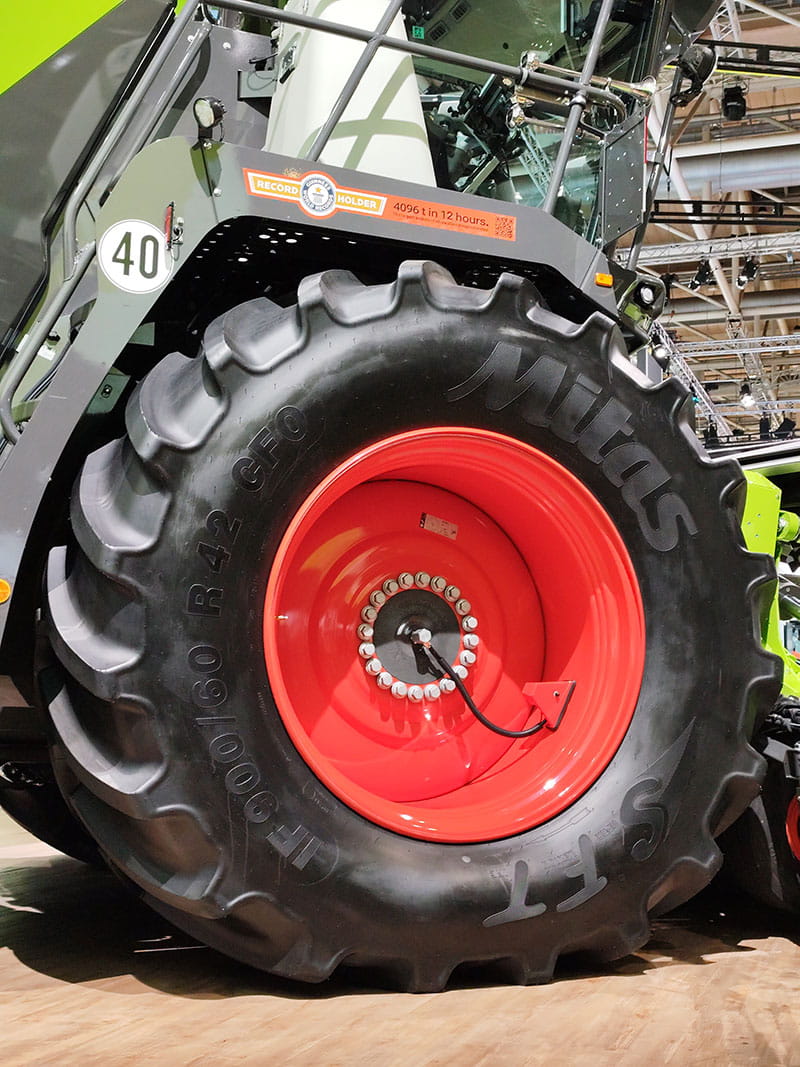
- CFO (Cyclic Field Operation): applicable exclusively to VF and IF tyres, this marking is designed for machines operating in cyclic load conditions, such as combine harvesters, self-propelled sprayers, and fertilizer spreaders. CFO allows tyres to withstand higher loads for limited periods in the field at low speeds. An example of a MITAS tyre available with CFO technology is HC 3000
- CHO (Cyclic Harvesting Operation): similar to CFO, but applicable to standard tyres. It allows temporary overloads at low speeds during harvesting operations where machine weight increases progressively until unloading. Here is an example of a Mitas tyre for combine harvesters with CHO technology
- NRO (Narrow Rim Option): an ETRTO standard that allows VF and IF tyres to be mounted on narrower rims than those normally specified. Mitas HC 1000 is an example of a tyre available with NRO technology: click here to find out more!
- PFO (Pressure Field Operation): applicable to VF and IF tyres, this marking allows reduced inflation pressure at the same load during field operations at speeds of 5, 10, and 15 km/h. Unlike CFO and CHO, PFO focuses on enabling lower pressures rather than higher loads, making it ideal for use with CTIS (Central Tyre Inflation System) technology. A representative example is the Mitas GRANTERRA tyre and you can find all the information at this link
Making the right choice is essential!
In conclusion, every tyre features a series of markings that provide essential information about its dimensions, performance, and intended use. By knowing what these symbols mean, you can confidently choose the right tyre at the time of purchase, ensuring optimal performance, safety, and efficiency for your machinery.