

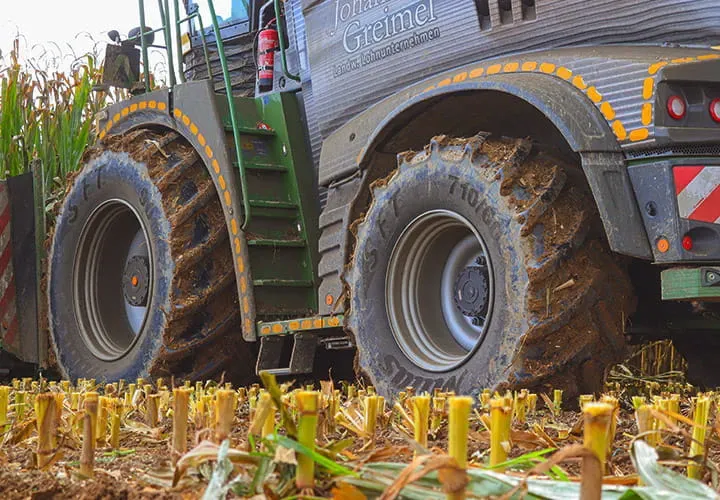
Mitas offers a wide range of radial tractor tyres across the United Kingdom, built for demanding agricultural applications and high-horsepower tractors, sprayers, and spreaders. These high-flexion, low-noise, and powerful tyres deliver top performance in every agricultural environment.
Our radial agricultural tyres combine high load capacities with outstanding service life, strong field traction, and low inflation pressures that help reduce soil compaction—protecting your ground while cutting operational costs. Designed for efficiency, these agricultural tyres also allow higher on-road speeds, making transport between fields seamless throughout the day.
Browse our full range of agricultural tyres below, or use our guides to understand how radial construction works, compare radial with diagonal options, and find the exact Mitas agricultural line to suit your machinery.
How to choose the right agricultural radial tyre for your tractor
| Line | Best for | Key strength |
|---|---|---|
| AC 65 | All-round field and road work on mid to high-horsepower tractors | Balanced traction and long service life |
| AC 70 | Modern tractors where flotation and soil protection matter | Low-pressure operation, reduced compaction |
| AC 85 | Row-crop and standard field work | Strong traction from deep lugs |
| HC 70 | High-capacity work on heavy tractors | High load carried at low inflation pressure |
| SFT (Super Flexion) | Harvest and high-load field work | Maximum flotation, minimum soil compaction |
| SST | Sprayers and spreaders needing narrow, high-load tyres | Load capacity in a narrow section |
How radial tractor tyres work and why they outperform
In a radial tractor tyre, the casing plies run straight across the tyre from bead to bead, with a stabilising belt beneath the tread. This separates the job of the sidewall from the job of the tread. The sidewalls can flex while the tread stays flat on the ground, which is what gives a radial tyre its long, wide footprint.
That footprint is where the benefits come from. More rubber in contact with the soil means more traction and less wheel slip, so you put more of your engine power into the ground and use less fuel doing it. The same flexing sidewall lets you run lower inflation pressures, which spreads the load over a larger area and reduces soil compaction. It also absorbs more of the ride, so the cab is quieter and more comfortable at road speed.
Radial vs diagonal tractor tyres: which should you choose?
| Construction | Footprint & ride | Best use | Soil compaction | Road speed |
|---|---|---|---|---|
| Radial | Long, wide, flat footprint; flexible sidewalls; smoother ride | High-horsepower tractors, field work, sprayers and spreaders, mixed field and road | Lower — runs at lower inflation pressures | Higher sustained speeds, less heat build-up |
| Diagonal (bias) | Shorter, rounder footprint; stiffer crossed-ply sidewall | Hard ground, stubble, forestry and industrial duty, older machines | Higher — needs greater pressure for the same load | Lower — better suited to shorter road runs |
Tyre sizes, load index and inflation pressure
A radial tractor tyre size such as 540/65R38 tells you the section width in millimetres (540), the aspect ratio as a percentage of that width (65), the construction (R for radial) and the rim diameter in inches (38). Alongside the size you will find a load index and speed symbol, which together define how much the tyre can carry and how fast it can run.
Pressure matters more on radials than on any other agricultural tyre, because the flexing sidewall is what delivers the footprint. Set the cold inflation pressure to match your actual axle load and working speed rather than simply filling to a maximum. Run it correctly and you get the traction, fuel and compaction benefits the construction is designed for; run it too high and you lose most of them. Full load and pressure tables are available in our technical documentation, and your dealer can set them for your machine.