

How road and field tire designs shape agricultural mobility
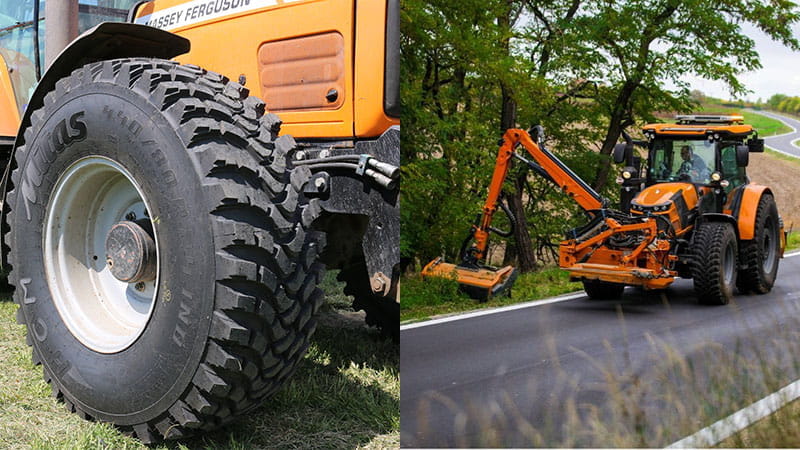
Characteristics of field tires
Field tires, typically used on tractors and harvesting machines, are primarily designed to maximize traction on the ground and to transfer all the power required to pull agricultural implements. For this reason, they feature deep lugs and wide spacing between tread blocks, increasing traction even on the most challenging and uneven terrains.
These tires are often designed with technologies that allow lower inflation pressure while maintaining high load capacity, helping to increase the tire’s footprint. Discover more on our website about selecting the correct inflation pressure in different operating environments, helping you always make the best choice.
Adapting the tread design to the specific application is essential, as different tasks require different levels of traction, stability, and soil management. A tread pattern designed for the intended application supports efficient performance in working conditions, helping reduce slippage and soil compaction. The result is improved machine performance and extended tire life.
Another important aspect from both a performance and regulatory standpoint is tire self-cleaning, meaning the tire’s ability to expel soil residues trapped between the lugs during field operations.
If soil accumulates, it can significantly reduce tractor traction and therefore the efficiency of field operations. It may also create risks during road transport, as debris left on the road surface can lead to penalties under road safety regulations.
Finally, the need for a tire capable of maximizing the contact footprint and adapting to uneven field surfaces requires the use of a softer and more flexible compound.
Characteristics of road tires
Road tires, on the other hand, are designed with opposite priorities. They must be optimized for rolling performance, minimizing friction with the road surface and reducing noise levels. For this reason, their tread pattern is significantly less aggressive, which greatly improves driving comfort.
They are also manufactured using a harder compound that is more resistant to heat and abrasion. At the same time, the tire structure is designed to withstand higher speeds without overheating.
Self-cleaning tread performance also plays an important role in road tires for the same reasons mentioned earlier. Although they are designed primarily for use on clean and regular surfaces, they often need to enter fields when used on equipment connected to tractors, such as trailers or slurry tankers.
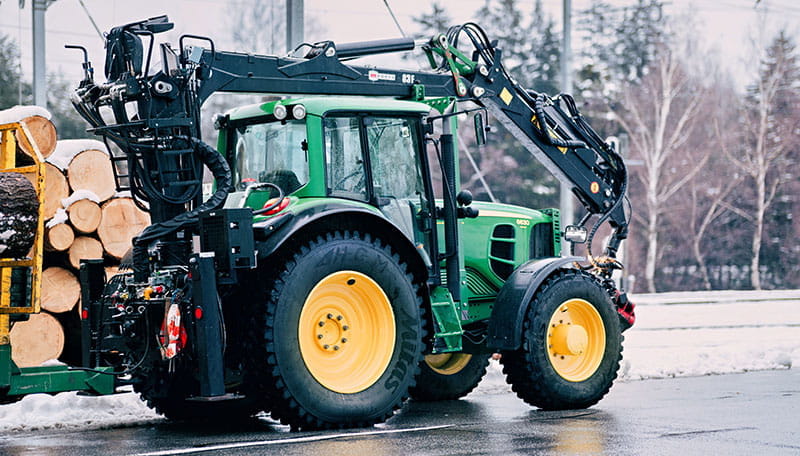
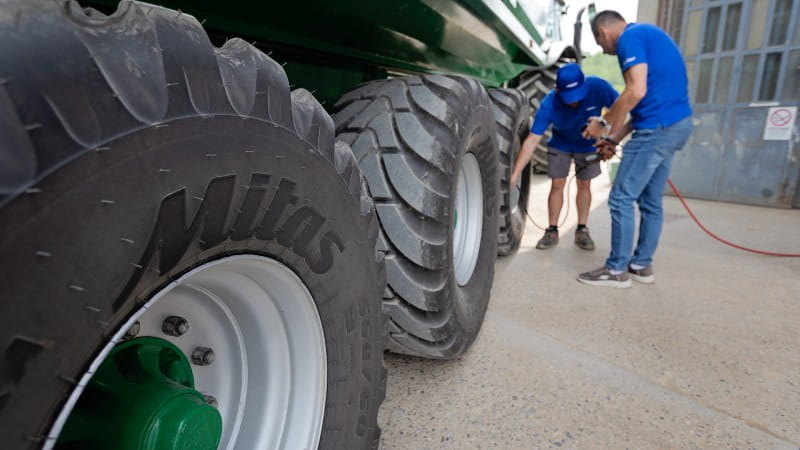
Versatile tires designed for both road and field use
In addition to tires specifically designed for road use or field use, there are also versatile solutions capable of delivering excellent performance in both environments. One example is the Mitas HCM, which stands for “High Capacity Municipal”, the tire solution created for all terrains and seasons usage.
Its tread pattern is less aggressive and more closely spaced, allowing it to perform well both on uneven surfaces such as agricultural fields and on more regular surfaces such as rural roads and asphalt. The double profile of the central lugs provides excellent traction even in demanding conditions, while the radial structure with a steel belt and the specific tread design ensures excellent durability.
Rolling noise is reduced thanks to the different lengths of the lugs and their alignment along the tire circumference, which distributes noise across a broader frequency range. Another key strength of the Mitas HCM tire is its excellent self-cleaning capability, an important feature for maintaining traction and minimizing the risk of leaving debris on road surfaces.
Discover all the features of the Mitas HCM tire on our website.
Choosing the right tire for every application
Every tire is designed to deliver its best performance in a specific environment. Whether your work takes place entirely in the field, entirely on the road, or across both scenarios, choosing the right tire is essential to get the best performance from your agricultural machinery.