

Mid-harvest tire checklist: what to inspect and adjust
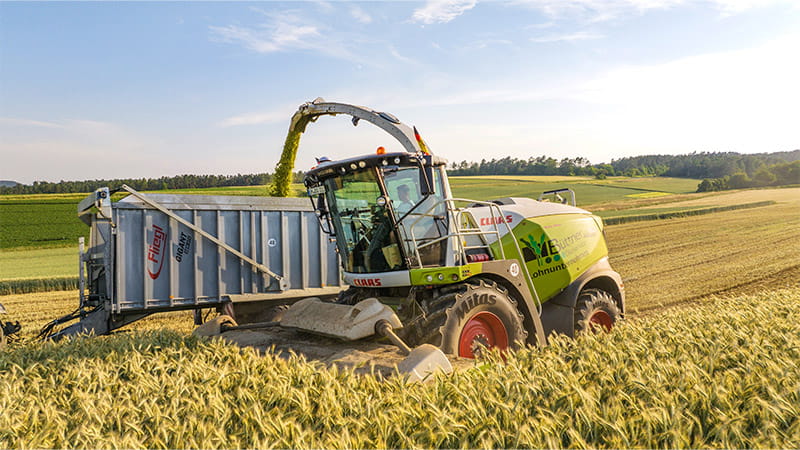
Day three of the cereal harvest. The combine has been running since five in the morning. By two in the afternoon, the grain cart is on its fourth road trip, loaded to capacity, maybe a little beyond. The tractor driver hasn’t touched the tire pressure since late June. The tires look fine. Harvest is moving.
Some hours later, a tire gives way on a farm road bend. The equipment stands still for a day and a half while a replacement is sourced. Fields wait. Harvest waits.
It is a predictable outcome of a predictable mistake: treating tires as a set-and-forget system during the season when they are working hardest, under loads and conditions that change by the hour.
Why mid-harvest is a stress test for tires
In the harvest season, three conditions converge on the tire at once: heavy axle loads, repeated road–field transitions, and almost no time for maintenance. A tractor that looked fine in the yard in the morning can be running too hard or too soft by the afternoon, especially if it has already hauled grain, pulled a trailer, or covered road distance between fields.
European farms know this reality well. Wheat, barley, maize, forage, potatoes, and beet all create different load profiles, and many operations cross from field to road several times a day. In North America, the distances are longer, but the principle is the same: machinery moves constantly, and the tires absorb every variation. In Brazil and other high-intensity crop regions, heavy loads and variable moisture compress the margin for error even further.
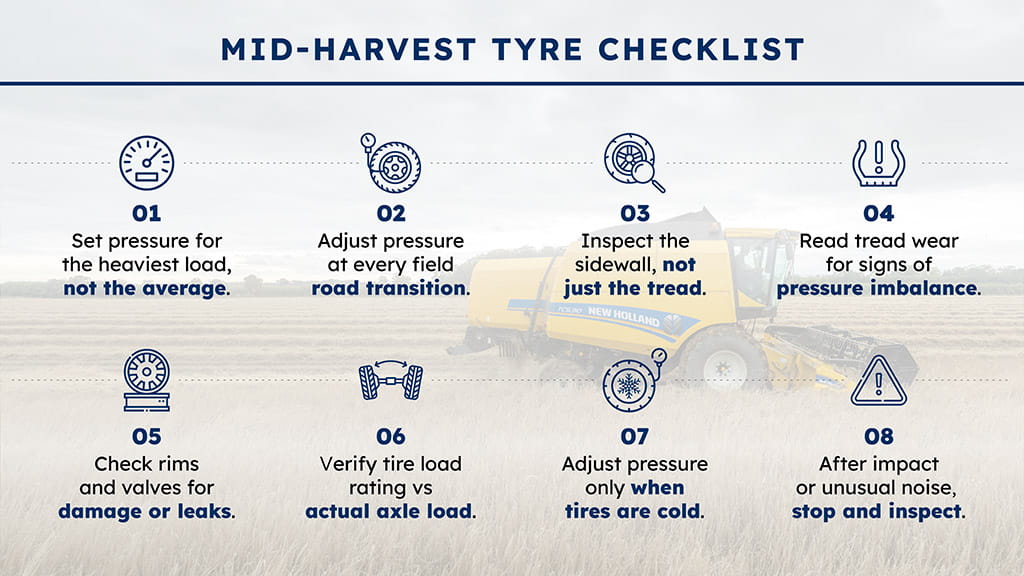
The Mitas mid-harvest tire checklist
During harvest, run through the tire check daily, or whenever there is a significant change in load or field conditions. Always carry out the inspection when the tires are cold: before the first run of the day, or after at least three hours at rest.
1. Set pressure for the heaviest load you will carry that day
Look up the maximum load expected on each axle and find the minimum pressure required to carry it safely at field speed, typically 6–10 km/h, in the relevant load-inflation table. Set a separate road pressure for transport runs. Stay within 0.2 bar of target values. Use a calibrated dial gauge. A visual check or a tire thumper is not accurate enough. A tire can be 0.5 bar underinflated and still look perfectly normal from the outside.
2. Adjust pressure when you change from field to road
Without a CTIS (Central Tire Inflation System), pressure adjustment needs to become part of the workflow: check and adjust before leaving the field, then check again before re-entering. VF (Very High Flexion) technology narrows the gap between field and road requirements, but it does not eliminate it. Pressure settings must still follow load, speed, and manufacturer recommendations.
3. Inspect the full sidewall circumference
Harvest stubble and crop residues are abrasive. Inspect the lower sidewall visually for cuts, abrasions, or embedded material, and hand-check carefully only when the machinery is safely parked. Stubble penetration rarely causes immediate damage; it causes slow structural weakening that shows up later, under load and during transport.
4. Read the tread wear pattern
Uneven wear across the tread width is information. Heavy wear on the shoulder lugs with relatively fresh centre lugs points to chronic overinflation or excessive road use at speed. Heavy wear in the centre with intact shoulders suggests underinflation or sustained drawbar pull work. Both patterns shorten service life and signal a pressure management issue worth addressing mid-season. You can check our dedicated article about agricultural tire wear here.
5. Check rims and valve stems
During harvest, tractors and trailers travel across compacted tracks, road edges, and uneven yard surfaces more often than at any other time of year. Inspect rim flanges for bending or cracking. Check that valve stems are seated straight and not kinked. A kinked valve loses pressure slowly and is often the cause of a mystery drop between morning and afternoon. Replace any missing valve cap immediately. Dirt in a valve stem is enough to cause a slow leak.
6. Verify load ratings against actual axle weights
Running a different grain cart, trailer, or implement combination compared to last season? Confirm that the tire load index on each axle matches the actual maximum axle load. In Europe, agricultural vehicles on public roads are subject to national axle load regulations that vary by country. A tire operating beyond its load index is both a safety concern and a potential regulatory issue.
7. Let the temperature drop before making a final pressure call
After a road run, wait at least thirty minutes before adjusting pressure. A tire returning from a 10 km transfer at 35 km/h may read 0.3-0.5 bar above its cold baseline. Deflating to target while the tire is still warm means it will be underinflated once it cools. Check cold, adjust cold.
Mitas for harvest conditions
Mitas agricultural tire ranges are engineered for this kind of mixed-use reality, where field performance and road transfer have to coexist on the same working day. The right choice for harvest is a tire that supports the load on the axle while still protecting the soil during peak traffic, whether on a tractor or a combine harvester. For guidance on the best solution for your equipment and conditions, speak to your Mitas dealer.
Keep it moving
Harvest moves fast. These eight checks do not take long, but skipping them has a cost that shows up at the worst possible moment. Match pressure to load, read what the tire is telling you, and reset whenever the work changes. That is what keeps the equipment running and the harvest moving.