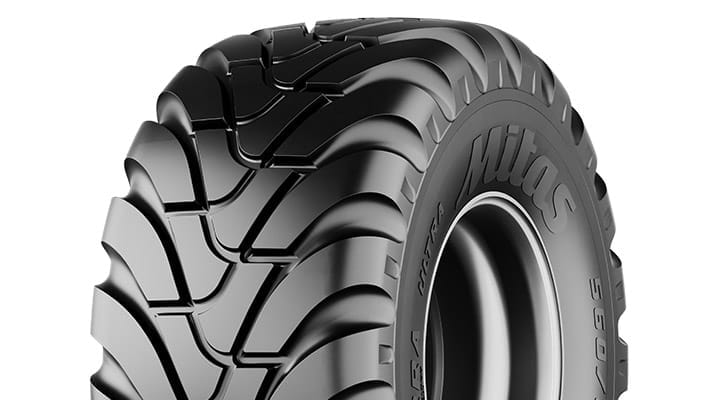
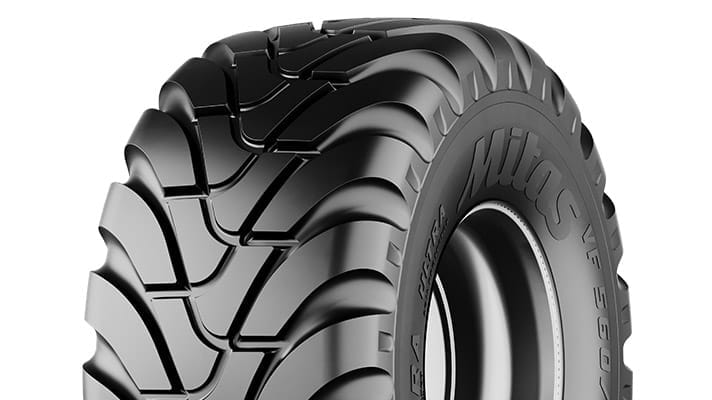
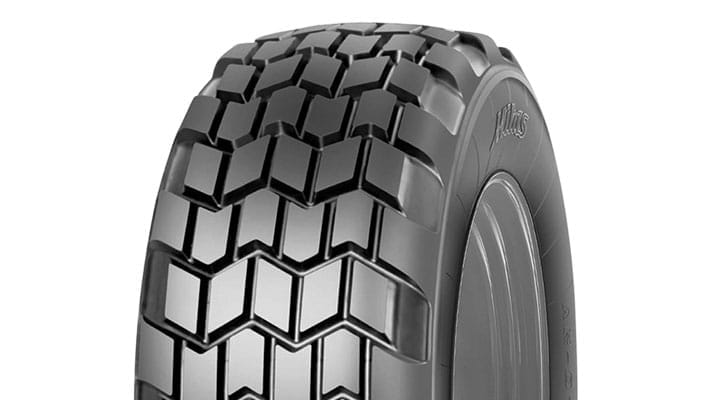
High-performance agricultural tires.
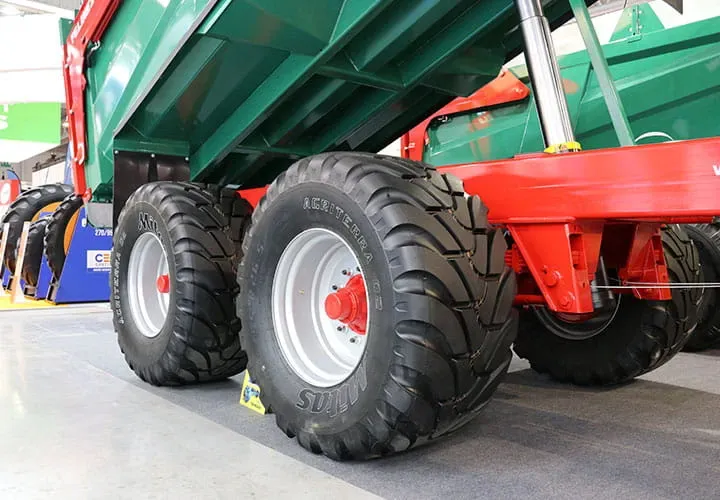
- This is a fast, high-performance radial agricultural tire with a wide range of uses including on trailers, loading and transport vehicles, slurry tankers, spreaders, and other aggregation equipment.
- The tire has an outstanding load capacity resulting in improved productivity as fewer journeys are required.
- The D speed index (65 km/h maximum speed) meets the needs of modern trailers as well as loading and transport vehicles for fast travel both on- and off-road.
- The tire has excellent wear and puncture resistance and reinforced rim attachment, extending its service life.
- The tire’s larger footprint, low tread depth, and steel braker reduce noise levels.
- The tire’s large dimensions and rounded shoulders make the AGRITERRA 02 gentle on both soil and grassland, resulting in increased yields.
Available Tires Sizes:
500/60 R 22.5 | 560/45 R 22.5 | 600/50 R 22.5 | 710/45 R 22.5 | 600/55 R 26.5 | 650/55 R 26.5 | 650/65 R 26.5 | 710/50 R 26.5 | 800/45 R 26.5 | 710/50 R 30.5 | 850/50 R 30.5
Please visit the table below for more details.
Technical data
Unit
| Tire size | Service description | Tread pattern | Type | Permitted rims | Section width | Overall diameter | Static radius | Rolling circumference | EAN code | Pressure table | Detail |