

Agricultural tyre wear: do you know how to prevent and monitor it?
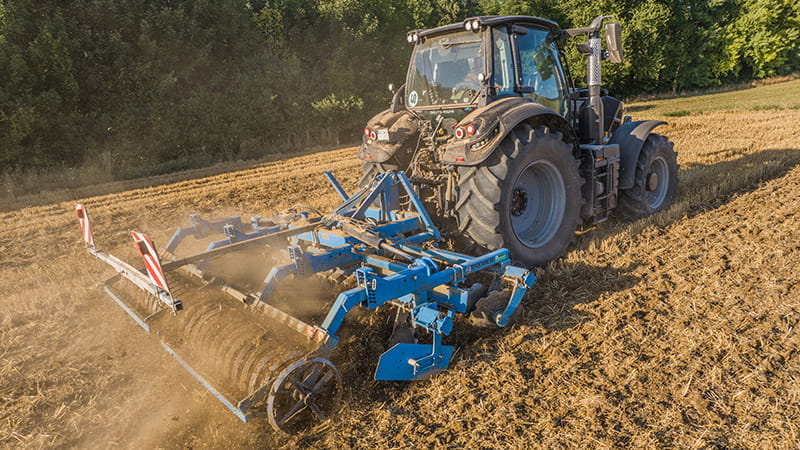
Incorrect machine setup
Irregular tyre wear concentrated on the inner or outer side of the tread may indicate a wheel alignment issue. In these cases, it is important to check some key wheel geometry parameters:
- One of these is toe alignment, meaning the angle of the tyres in relation to the longitudinal axis of the vehicle: under optimal conditions, the wheels should be parallel to each other and correctly aligned with the ground
- Wheel geometry parameters such as camber angles should also be checked where applicable. This parameter defines the inclination of the wheels relative to the vertical axis and, if not correctly adjusted, can lead to abnormal and uneven tread wear
Correct wheel alignment helps minimize irregular tread wear, improve handling and maximize tyre service life.
The main causes of tyre wear and useful tips to prevent it
Among all factors affecting tyre lifespan, inflation pressure is one of the most important.
First of all, incorrect inflation pressure in relation to the conditions in which the tractor is operating. In agriculture, it is good practice to adjust tyre inflation pressure depending on the surface on which the tractor is moving:
- In the field, inflation pressure should be adjusted according to load and operating conditions in order to maximize traction and reduce soil compaction
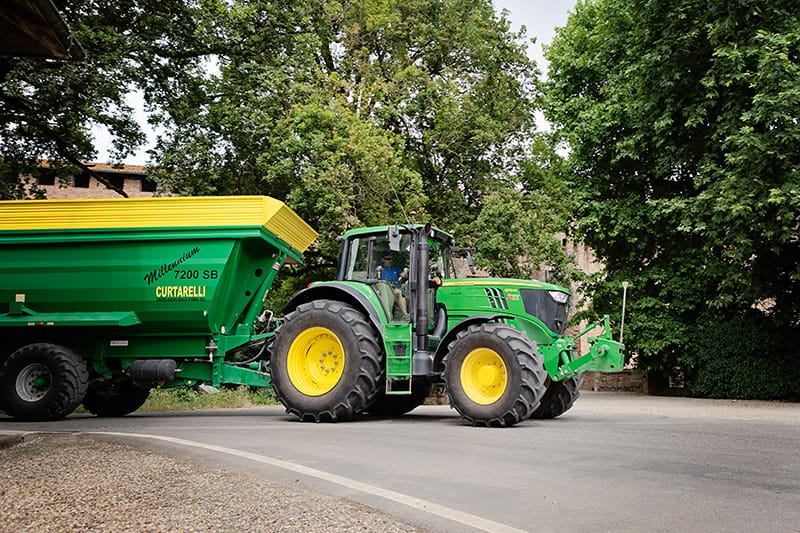
- During road transport, pressure should be adjusted according to load and speed requirements to reduce rolling resistance, limit heat build-up and improve fuel efficiency
When moving from field work to road transport, tyre pressure should always be adjusted according to the manufacturer's load and speed recommendations. Otherwise, rolling resistance increases, leading to higher fuel consumption and, above all, greater tyre overheating and therefore increased wear.
An overinflated tyre will also wear out more quickly and unevenly, as it tends to take on a convex shape, putting more stress on the tread lugs in the central area.
To ensure you are using the correct pressure for each type of tyre, you can use the calculator available on our website at this link.
Prevention and monitoring are crucial
To maximize tyre efficiency and safety, it is essential to carry out regular visual inspections in order to identify any irregularities. Uneven tread wear, deformations, cracks and cuts are all warning signs that should not be ignored.
In addition to visual monitoring, it is important to make use of the sensors installed on many modern tractors, such as real-time tyre pressure monitoring systems (TPMS), telematics solutions and performance monitoring systems.
It is also advisable to monitor load distribution to prevent worsening deformations. During harvesting and silage operations, agricultural tyres are subjected to significant stress.
Heavy loads come from the weight of the tractor, implements, trailers and transported crops. These conditions increase pressure on both the tread and the tyre casing. Over time, such stress can cause permanent deformation and reduce tyre performance.
Pay attention to tyre markings
Another important factor is compliance with tyre markings that indicate the tyre’s performance limits, especially those relating to maximum speed and maximum load capacity. Even before considering wear, these specifications are essential for ensuring safety during operation.
In addition, to correctly interpret the speed index and avoid wear caused by road transport, users can refer to the equivalence table supplied with the equipment at the time of purchase.
Every tyre features markings that provide crucial information for correct use. You can consult the article on our website where we explain them in detail here.
Most tyre wear can be prevented
Agricultural tyres are the only point of contact between the machine and the ground, making them a critical component for both productivity and safety.
While tyre wear is inevitable over time, premature wear is often the result of preventable factors such as incorrect inflation pressure, excessive transport speeds, poor machine setup or inadequate monitoring.
By adopting good maintenance practices and operating tyres within their intended limits, operators can significantly extend tyre service life, reduce operating costs and improve overall machine efficiency. A proactive approach to tyre management helps maximize the return on investment and ensures reliable performance throughout the tyre's working life.